
Finding Growth Before It Finds More Space
Mold Inspection in Baltimore for identifying visible and hidden mold concerns before additional property damage occurs
Mold growth often begins in places you cannot see: behind drywall dampened by a slow plumbing leak, beneath flooring where condensation accumulates, or inside HVAC ducts where humidity condenses on cool surfaces. By the time visible colonies appear on walls or ceilings, the affected area typically extends well beyond what's immediately obvious. Professional mold inspection in Baltimore identifies both visible growth and hidden concerns using moisture meters, thermal imaging, and air sampling to evaluate where moisture sources have created conditions suitable for colonization.
Inspection begins by identifying moisture sources—roof leaks, foundation seepage, poor ventilation, condensation on cold surfaces, or plumbing failures—that contribute to elevated humidity levels above the 60 percent threshold where mold spores already present in every building find conditions to germinate. Detection methods locate moisture trapped inside wall cavities, under flooring materials, or within insulation where visual inspection cannot reach, mapping the extent of affected areas before remediation planning begins.
Arrange a mold inspection if you notice musty odors, visible discoloration, or recent water intrusion events.
Why Early Detection Prevents Larger Problems
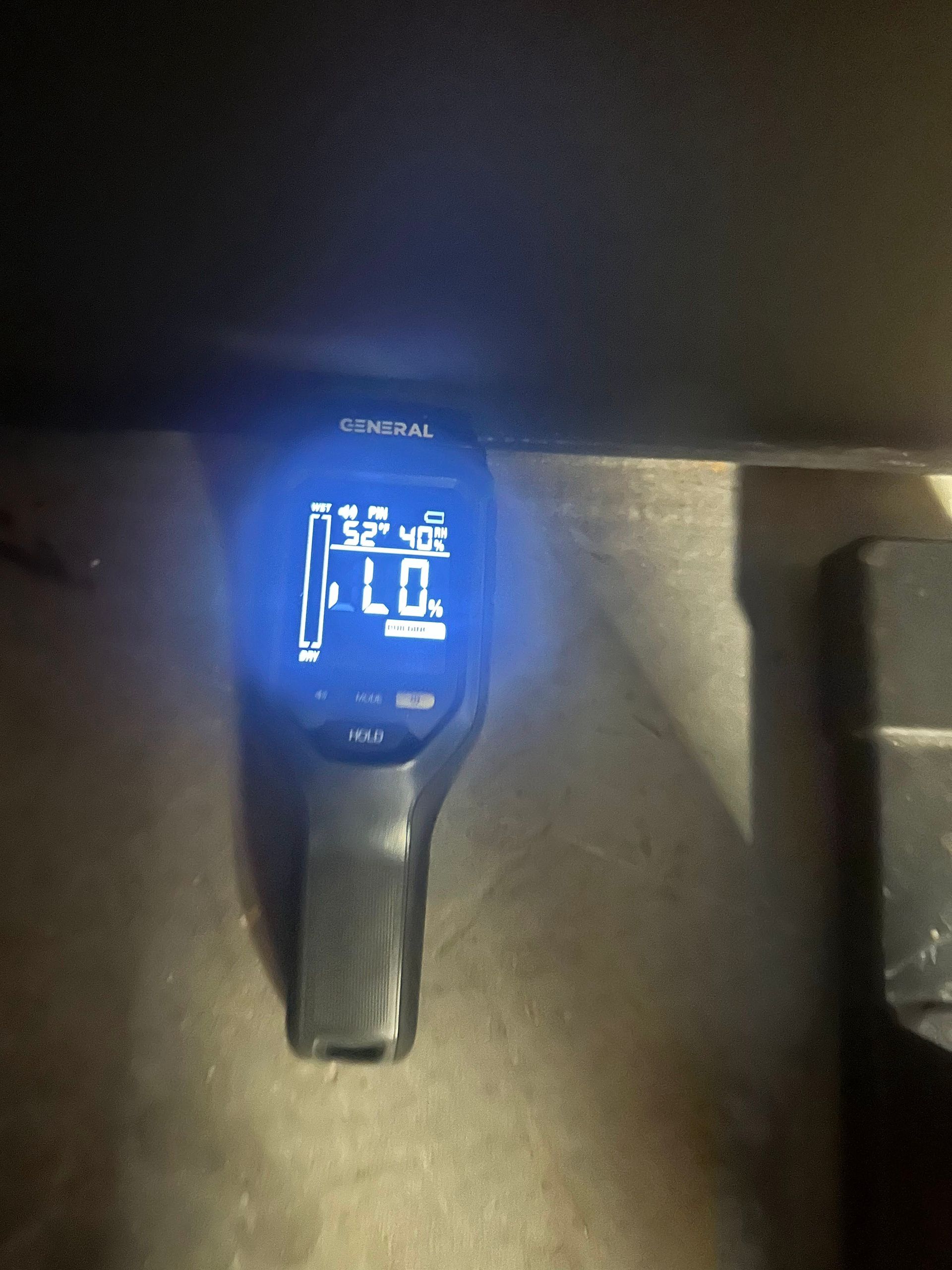
Mold inspection evaluates moisture levels in building materials, identifies active growth areas, and assesses conditions that allow continued colonization. Thermal imaging reveals temperature differentials that indicate wet insulation or trapped water, while moisture meters quantify saturation levels in wood, drywall, and concrete. Early detection limits the area requiring remediation, preserves more building materials, and prevents the need for extensive demolition that becomes necessary when growth spreads through interconnected wall cavities or ceiling spaces.
You receive documentation showing where moisture readings exceed acceptable levels, which materials contain active growth, and what conditions need correction to prevent recurrence after remediation. Inspection results guide remediation scope, helping you understand whether the issue involves surface cleaning or requires removal of affected drywall, insulation, or flooring materials.
The inspection includes visual assessment of accessible areas, moisture mapping using electronic detection tools, and documentation of findings with photographs and moisture readings. It does not automatically include laboratory analysis of mold species, though air or surface samples can be collected for lab testing when health concerns or insurance documentation require identification of specific mold types. Inspection focuses on locating the moisture problem causing growth rather than simply cataloging where mold appears, since eliminating the moisture source determines whether remediation produces lasting results.
Common Questions About Mold Detection
Property owners often wonder what inspection involves, when it becomes necessary, and what results indicate about the next steps. These answers address frequent concerns about mold detection services.
What moisture sources commonly contribute to mold growth in Baltimore properties?
Basement foundation seepage during heavy rain events, condensation on cold water pipes in humid summer months, roof leaks that saturate attic insulation, bathroom exhaust fans venting into attic spaces instead of outdoors, and appliance supply line failures all create prolonged moisture conditions where mold colonizes porous materials.
How does inspection identify mold hidden behind walls or under flooring?
Moisture meters with penetrating pins measure water content inside drywall and wood framing, while thermal imaging cameras detect temperature differences caused by wet insulation or trapped water, revealing moisture patterns that indicate likely growth areas even when the mold itself remains hidden from view.
When should you schedule a mold inspection rather than attempting visual assessment yourself?
Professional inspection becomes necessary when musty odors persist without visible growth, after any water damage event lasting more than 48 hours, when household members experience respiratory symptoms that improve away from the property, or when buying property where moisture history is uncertain.
What do inspection results tell you about remediation requirements?
Moisture readings above 16 percent in wood or 1 percent in drywall indicate conditions requiring drying or material removal, while air sample results showing elevated spore counts compared to outdoor baseline levels suggest active growth requiring containment and removal rather than surface cleaning alone.
How long does a typical mold inspection take for a residential property?
Most residential inspections require one to two hours depending on property size and accessibility of areas being evaluated, with results and recommendations provided immediately for straightforward cases or within 48 hours when air or surface samples are sent to laboratories for species identification and spore quantification.
Total Restoration conducts mold inspections for residential and commercial properties throughout Baltimore, using professional detection methods to evaluate moisture concerns before they require extensive remediation. Contact us to schedule an inspection if you suspect moisture intrusion or notice conditions that may support mold growth.